بكلمات بسيطة
A facade cost number is only meaningful with its assumptions attached — here is the budget logic for 2026.
A facade is the exterior envelope of a building: glazing, aluminium frames, panels and the joints between them. Cost is measured per square metre, but the number follows system choice, glass build-up, geometry, finish, performance criteria, freight and the installation route. No single global rate survives contact with a real project.
بيانات القرار
Early facade budget framework
Any early facade cost estimate should carry its assumptions on the same page — area, system, glass build-up and delivery route
| Project route | Useful early reference | Main cost mover | Next evidence needed |
|---|---|---|---|
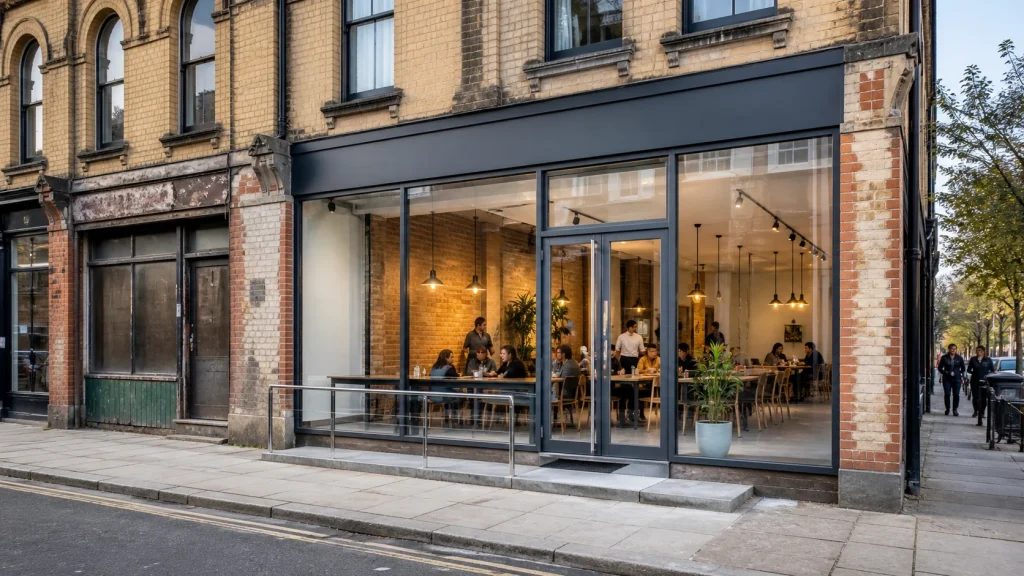
| Small shopfront renovation | Often US$30k–50k | Survey, retained structure, access and finishes | Photos, frontage dimensions and opening date |
| Custom residence or villa | Measure by envelope area and opening schedule | Glass size, operability, shading and logistics | Elevations, location and performance priorities |
| Public or cultural building | Project-specific measured package | Geometry, testing, interfaces and programme | Concept set, specification and responsibility matrix |
| Commercial, mixed-use or high-rise | Project-specific measured package | System repetition, wind criteria, mock-up and lifting | Facade schedule, design criteria and enclosure date |
انتقل لأسفل للأمام لكي تقارن كل الأربع أعمدة على الهاتف المحمول.
What drives facade cost
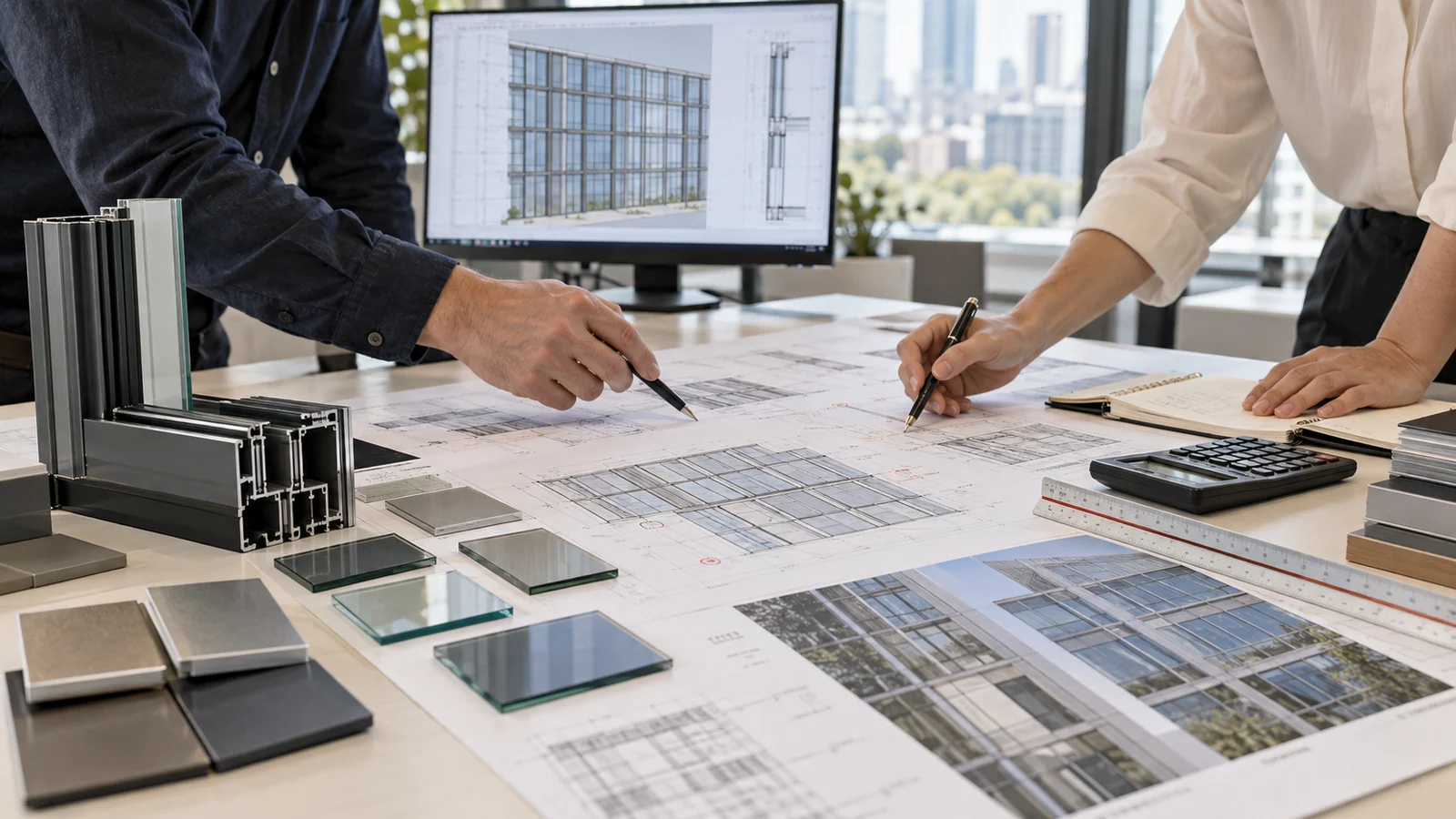
Five factors move a facade cost more than anything else. Area, obviously. But also the glass build-up — triple glazing, laminated panes and solar coatings each add real money per square metre. The finish: anodising and specialty coatings cost more than standard powder coat. Complexity: corner panels, curved glass and inset details multiply fabrication hours. And storey count, which drives installation method more than material.
The system choice then frames everything. Residential and shopfront ranges can support early planning, while public, cultural, commercial and high-rise packages are assessed from facade area, system, performance criteria, programme and delivery scope. Starveil does not apply a seven-storey or US$3 million capability ceiling.
Indicative ranges by project type
Early planning references for smaller scopes remain useful: shopfront renovations may begin around US$30,000–50,000, while custom residential envelopes vary widely with area, glass and geometry. Multi-family, public, cultural, commercial and high-rise packages should be budgeted from measured facade area and a defined performance and delivery brief rather than a generic building-type ceiling.
Treat these as briefing ranges, not quotations. Drawings or clear photographs, rough dimensions, project location and the intended delivery scope allow the supplier to narrow the basis and identify the information still needed for a project-specific budget review.
How systems compare
Stick curtain wall is usually the most economical route for one-off envelopes, because it is fabricated as lengths and assembled on site. Frameless facades carry a premium for the glass and the engineering, and repay it in the view. Compact unitized cassettes cost more per square metre than stick, but compress installation time dramatically — on constrained sites or short weather windows, the total project cost often favours them.This is why facade cost comparisons only close at system level, never at “curtain wall” level.
drives installation
Renovation packages are priced by bay rather than by square metre, which is why a shopfront renovation can complete within weeks.
What a Design & Supply quotation includes
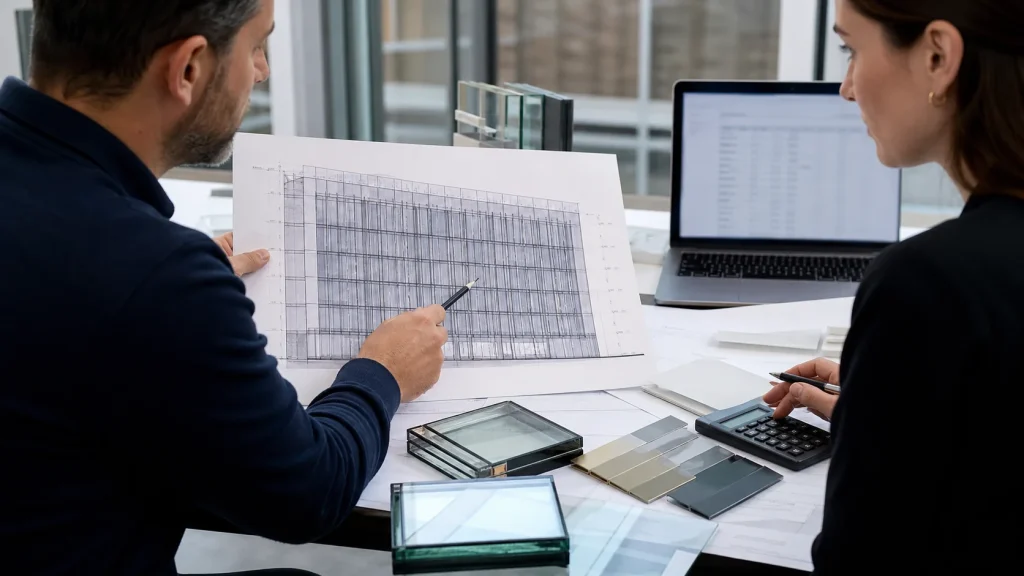
A complete D&S quotation turns facade cost into a documented scope: engineering, glass build-ups, finishes, fabrication QA regime, packing and freight terms, and the support level — remote engineering, installation manuals, or defined site supervision. If an item is excluded, the quotation should identify it and name the party expected to carry it.
Installation is priced separately and transparently: your own crew with our manuals, your crew with our engineer beside it, or — for the right projects — our own installation.
How to brief for a sharper quote
Send drawings if you have them; if you don’t, send photos, a location and rough dimensions. State your target budget range — it saves a round of guessing on both sides. Say who will install. And give us the date that actually matters, whether that’s a container date, a crane date or a grand opening. The sharper the brief, the sharper the number.A sharp brief narrows the facade cost range faster than any negotiation can.Anchor the performance criteria to recognised test methods — the FGIA/AAMA procedures in North America and CWCT guidance in the UK — so every bidder prices the same targets.
ملف قرار المشروع
Turn an early range into a controlled cost plan
An early facade allowance becomes useful when every number carries a basis. Record the measured area, assumed system family, typical module, glass build-up, aluminium finish, opening types, project location, delivery term and installation boundary beside the rate. If one bidder includes brackets, perimeter flashings, packing and site supervision while another prices only frames and glass, the two rates are not comparable even when both are expressed per square metre.
Create an assumptions register before asking suppliers to sharpen the figure. Mark each item as confirmed, provisional or excluded, and name the decision date that will replace the assumption. Separate recurring quantities from special conditions such as corners, entrances, canopies, roof interfaces, oversized panes and access equipment. That lets the team see whether a design change affects the whole elevation or only a small group of expensive details.
Update the cost plan at defined gates: after system selection, after coordinated elevations, after glass and finish approval, and before production release. Do not hide exchange rate, freight, duty, local tax, testing or installation inside a single blended rate unless every bidder uses the same basis. A transparent cost plan may look less simple than one headline number, but it gives the client a decision trail and reduces the chance that exclusions return later as variations.
أدلة المشروع المنفذة
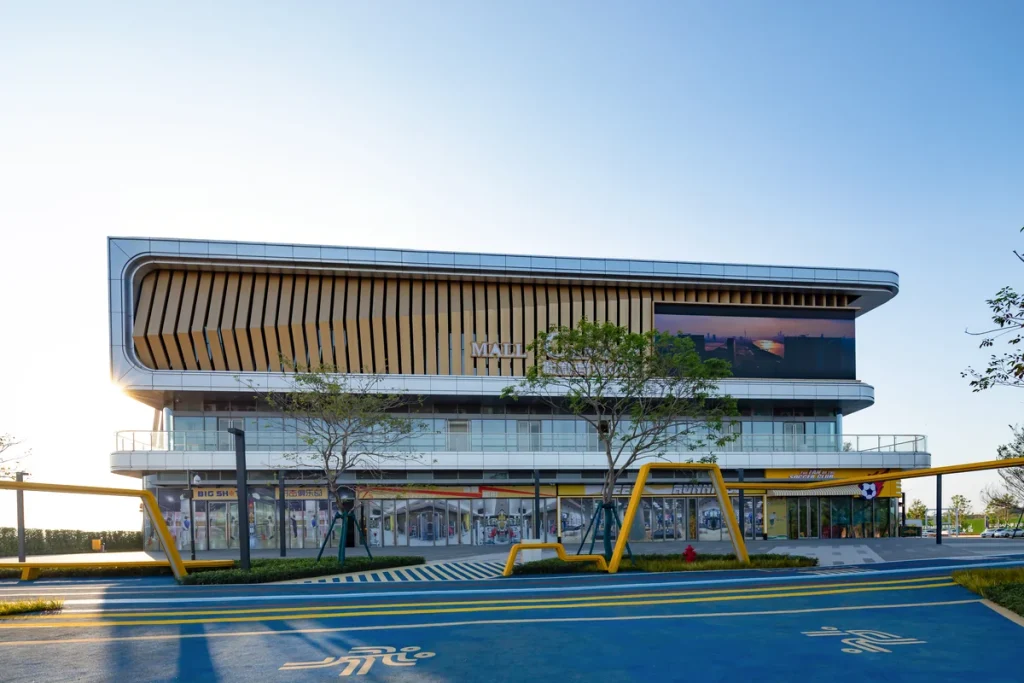
عرض تجاري في بانكوك سوكومويت
مجمع تجاري مكون من طابقين في منطقة الأعمال المركزية في سوتشمويت في بانكوك، مصمم كوجهة تجارية وترفيهية مميزة. طلب المخطط المعماري وجود واجهة حديثة تحمل علامة تجارية، تجمع بين الشفافية في الطابق الأرضي مع حجم مرتفع مصمم بشكل فني، وباقة مواد دافئة بما يكفي لتبدو ذات جودة عالية، لكنها متينة بما يكفي لقبول حرارة بانكوك ومطر الموسمية والأشعة فوق البنفسجية طوال العام.
فتح سجل المشروعالصور كافية لبدء العملية.
ابدأ بالتقرير المفيد الأدنى.
For a project-specific answer, send the information available now. We will identify the missing inputs instead of asking you to complete the design before the first conversation.
- Project city and building use
- Current drawings or clear facade photographs
- Approximate dimensions or measured facade area
- Target budget range and the date that matters
- Preferred installation route or known local contractor
ملخص القرار
ما يجب تذكره
- Separate supply, freight, installation and local approval costs.
- Price the specified glass build-up, not a visually similar substitute.
- Record exclusions before comparing bidders.
- Revisit the budget when geometry or programme changes.
Treat early facade cost estimates as a decision tool rather than a promise.The goal is to expose which assumptions carry money, then replace each assumption with a drawing, quantity, test requirement or named responsibility as the project develops.
المنصة التعليمية Rank Math FAQ
الأسئلة الشائعة
Can you quote a facade from photographs?
Yes, for an early budget indication. Clear exterior and interior photos, the city, rough dimensions and intended building use are enough to frame the first questions. A contractual quotation still requires verified dimensions, agreed performance criteria and a defined scope.Photographs anchor the conversation; drawings and quantities are what turn a facade cost from indicative to firm.
Is price per square metre a reliable comparison?
Only when every bidder is pricing the same facade area, glass, aluminium finish, hardware, performance evidence, freight term and installation boundary. A low rate often excludes interfaces, testing or site support that later return as variations.
What usually causes the largest facade cost increase?
Oversized or curved glass, high wind pressures, specialist coatings, complex corners, non-repeating modules, compressed programmes and difficult access can each move the number materially. Their combined effect is larger than any one aluminium profile choice.
What should be included in a useful budget request?
Send the project location, current drawings or photos, approximate facade area, building use, target performance, programme, preferred installation route and any known local approval requirement. State the budget range if one already exists.
What is a realistic curtain wall cost per square meter in 2026?
Indicative factory-package ranges for standard commercial stick systems sit around US180–320/m2,unitizedUS280–480/m², and bespoke or curved scopes beyond that — before freight, installation and local approvals, which can add 30–60% depending on destination. Treat any single global rate as a conversation starter, not a budget.
How do I keep facade cost under control on a fixed budget?
Three moves: freeze the glass build-up and performance spec before shop drawings, price the installation route alongside the supply package, and record every exclusion in writing before comparing bidders. Facade cost drifts through unpriced interfaces, not through the panels themselves.
حول الكاتب