بكلمات بسيطة
A facade delivery timeline links design approval, material release, fabrication, QA, packing and route-specific logistics. The dates depend on project complexity, material lead times, testing, consolidated approvals, shipping and site readiness; the sample schedule shown here is a planning framework, not a universal promise.
بيانات القرار
A typical facade delivery timeline: design to container
| Phase | Indicative window | Release needed | Frequent delay |
|---|---|---|---|
| Basis and shop drawings | Weeks 1–5 | Criteria, survey and coordinated comments | Missing interfaces or slow approval |
| Procurement and fabrication | Weeks 5–14 | Approved drawings, samples and material release | Late finish or glass changes |
| QA and packing | Weeks 12–16 | Inspection record and shipment release | Incomplete punch list or crate sequence |
| Freight and handover | Route-specific | Importer, documents, storage and site readiness | Customs, access or crane window mismatch |
انتقل لأسفل للأمام لكي تقارن كل الأربع أعمدة على الهاتف المحمول.

Design & engineering (weeks 1–4)
From your drawings (or photos and dimensions if drawings are still in progress), we develop system selection, performance specification and a fixed quotation. On acceptance, engineering begins: calculations, system drawings, then shop drawings issued for your approval. This phase moves as fast as your review turnaround.On a recent 4,600 m² stick-curtain-wall package, engineering and approval closed in five weeks because comments arrived as one consolidated set.
Approval gate (week 4–5)
You approve coordinated shop drawings, finishes against physical samples and the glass performance specification. Slow or fragmented comments can move the release date, so nominate one consolidated approval route and record the review period in the facade delivery timeline.
Fabrication (weeks 5–14)
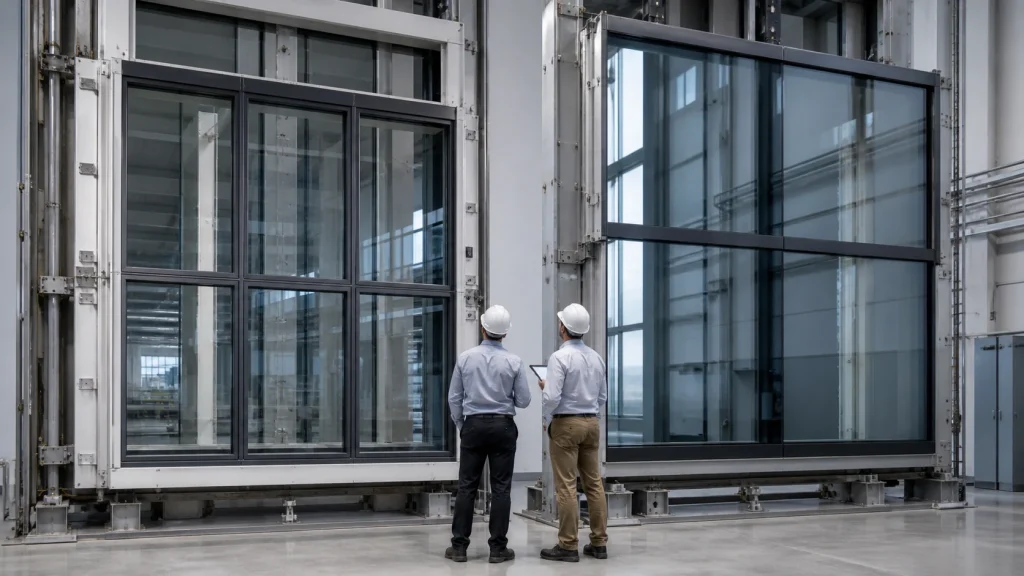
Machining, finishing, glazing and cassette assembly proceed under the agreed QA plan, with records linked to panels or lots. A client or consultant hold point can be set for the mock-up or first completed units. Any change should be assessed against procurement status, re-engineering, scrap and programme before it is accepted; cost does not depend on an informal ‘before or after fabrication’ rule.
Freight & customs (weeks 14–18)
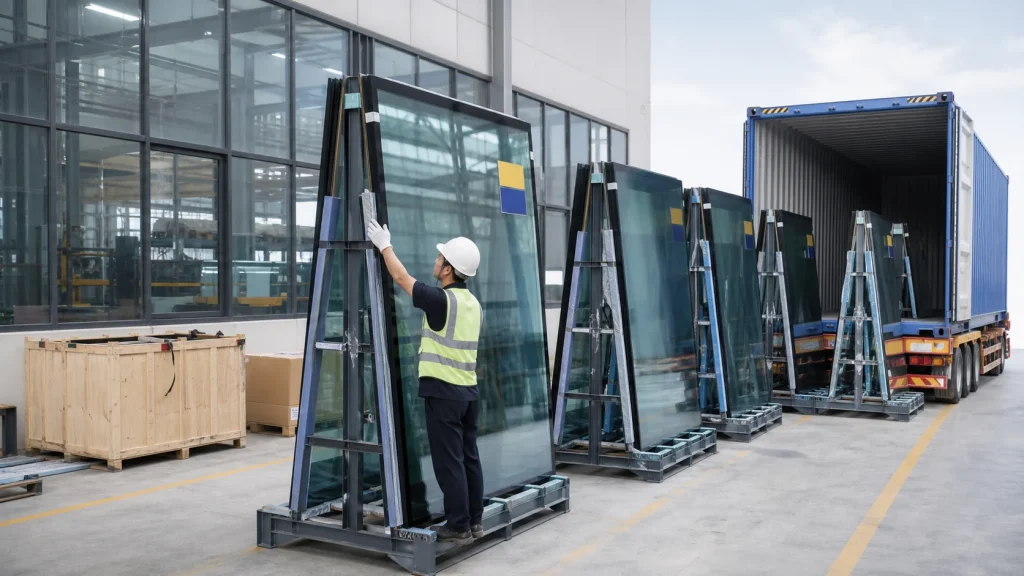
Packing is coordinated with the intended installation sequence, using the same elevation, level and bay references as the panel schedule. Shipment and customs durations are route-, carrier-, port-, product-classification- and document-dependent, so they belong in a live logistics plan rather than a universal two-to-six-week allowance.
Site handover (week 18 onward)
Your crew should receive installation packs before the container docks so briefing and access planning can begin early. Agree the inspection window required by the transport and insurance terms, then record container condition, packaging and any damage before components enter site storage.
Where projects actually lose time
Common delay sources include approval latency, late design changes, customs paperwork started after shipping and site readiness, including brackets and embeds not verified before the container lands. Track each risk against an owner and decision date; do not assume fabrication or logistics can recover time lost at earlier gates.
ملف قرار المشروع
Manage release dates, not only factory duration
A credible programme links each production activity to the information that releases it. Aluminium cannot be ordered intelligently before alloy, profiles and finish are fixed; glass cannot be released before build-ups, sizes, coatings and visual approvals are coordinated; machining should not start against unresolved anchors or interfaces. Show these dependencies in a release schedule so the team can see which client, consultant, supplier or site decision controls the next date.
Use progressive releases only when the boundaries are stable. A typical elevation or early zone may proceed ahead of the whole project if its geometry, performance, interfaces and quantities are genuinely frozen. Progressive release is not permission to manufacture around open design questions. Each package needs its own approved drawing list, quantity check and revision status, with later changes assessed for material already procured or work already completed.
The logistics plan should run beside the production plan. Confirm container or truck capacity, port and inland route, documentation cut-offs, site receiving dates, storage and lifting sequence. Add float for testing, inspections, holidays, shipping variability and site readiness instead of assuming fabrication can recover every earlier delay.Report facade delivery timeline status through decisions due, materials released, units completed decisions due, materials released, units completed, inspections closed and shipments booked. Those measures are more useful than a single percentage-complete figure that hides the critical path.
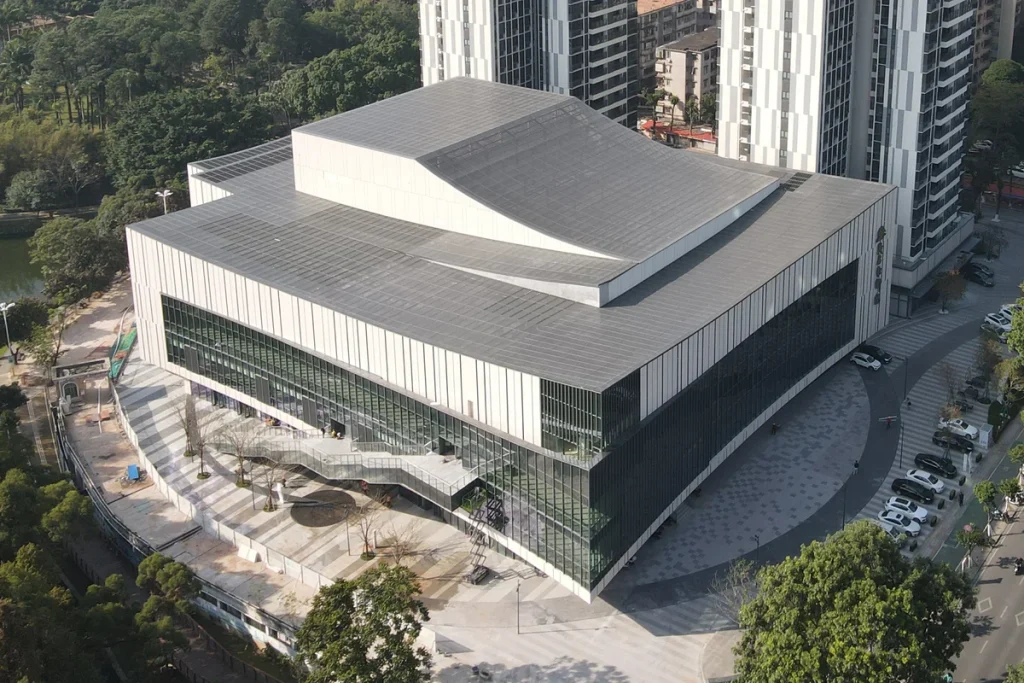
مسرح مدينة ماويمينغ
يتكون مجمع المسرح السينمائي المدني من حوالي 10,000 متر مربع، ويجمع بين قاعة رئيسية بسعة 1,200 مقعد ومساحتين سينمائيتين تضم كل منهما 450 مقعدًا إجماليًا. وتجسد تشكيله الخارجي هويّة ميناء ماويمينغ الساحلية في لغة الأقواس والأمواج، مما يمنح المكان الثقافي الجديد وجودًا عامًا عصريًا.
فتح سجل المشروعالصور كافية لبدء العملية.
ابدأ بالتقرير المفيد الأدنى.
للحصول على إجابة خاصة بمشروع معين، أرسل المعلومات المتاحة الآن. سنحدد العناصر الأساسية المفقودة بدلاً من طلب منك إكمال التصميم قبل أول محادثة. وفي حال عدم توفر الرسومات، فإن الصور العريضة والأبعاد الأولية كافية لبدء العملية.
- رسومات أو صور وموقع المشروع المعتمد
- الكميات التقريبية وأحجام الوحدات وسلسلة الإطلاق
- تاريخ التسليم المطلوب والميناء المقصود أو الطريق الداخلي
- افتراضات المستورد والتخزين والرفع والوصول
- فريق التثبيت المحلي وخدمة الدعم المطلوبة لـ T1 أو T2 أو T3
ملخص القرار
ما يجب تذكره
- Nominate one approval owner and response time.
- Release long-lead glass and finishes deliberately.
- Tie crate order to the site sequence.
- Do not ship into an unready site.
A credible facade delivery timeline links every date to an input, decision and owner. When the drawing register, production plan, packing list and site sequence use the same references, the programme becomes easier to defend and easier to recover.
المعايير والمراجع
المعايير والمراجع
تأكد من صحة الطبعة السائدة ومدى قابلية المشروع للتطبيق مع المستشار والسلطة المعينين.
المنصة التعليمية Rank Math FAQ
الأسئلة الشائعة
How early should facade engineering start?
Start while system depth, structure, glass, interfaces and budget can still change. Waiting for a complete construction set may appear efficient but often converts inexpensive coordination into redesign and programme pressure.Early engineering input is also what keeps the facade delivery timeline realistic — every week of late coordination lands directly on fabrication and shipping weeks later in the programme.
Can fabrication begin before final shop-drawing approval?
Only selected, clearly controlled procurement may be released at risk. Machining or assembly before geometry and interfaces are approved creates revision mixing, waste and claims. The release authority should be documented.
What usually delays export facade projects?
Slow consolidated comments, late finish decisions, unresolved structural tolerances, changed glass, new testing, incomplete import documents and a site that cannot receive the planned sequence are more common than simple factory delay — and each of these stretches the facade delivery timeline by weeks, not days.
How should programme float be used?
Protect it around approvals, testing, freight and first installation—not as hidden time to compensate for unresolved scope. A visible risk allowance helps the team decide which issues require early action.
How long is a typical facade delivery timeline from approved shop drawings?
From approved shop drawings to container loading, a standard facade delivery timeline runs 10–12 weeks: 2 weeks fabrication for flat panel systems, 3–4 weeks for unitized or curved scopes, and 2–3 weeks for testing, packing and export documentation.
What can shorten the facade delivery timeline on a Design & Supply project?
Three levers work most often — freezing the specification early, approving shop drawings in one round, and releasing extrusion billet orders against the deposit. Together they routinely cut 2–3 weeks from the schedule.
حول الكاتب